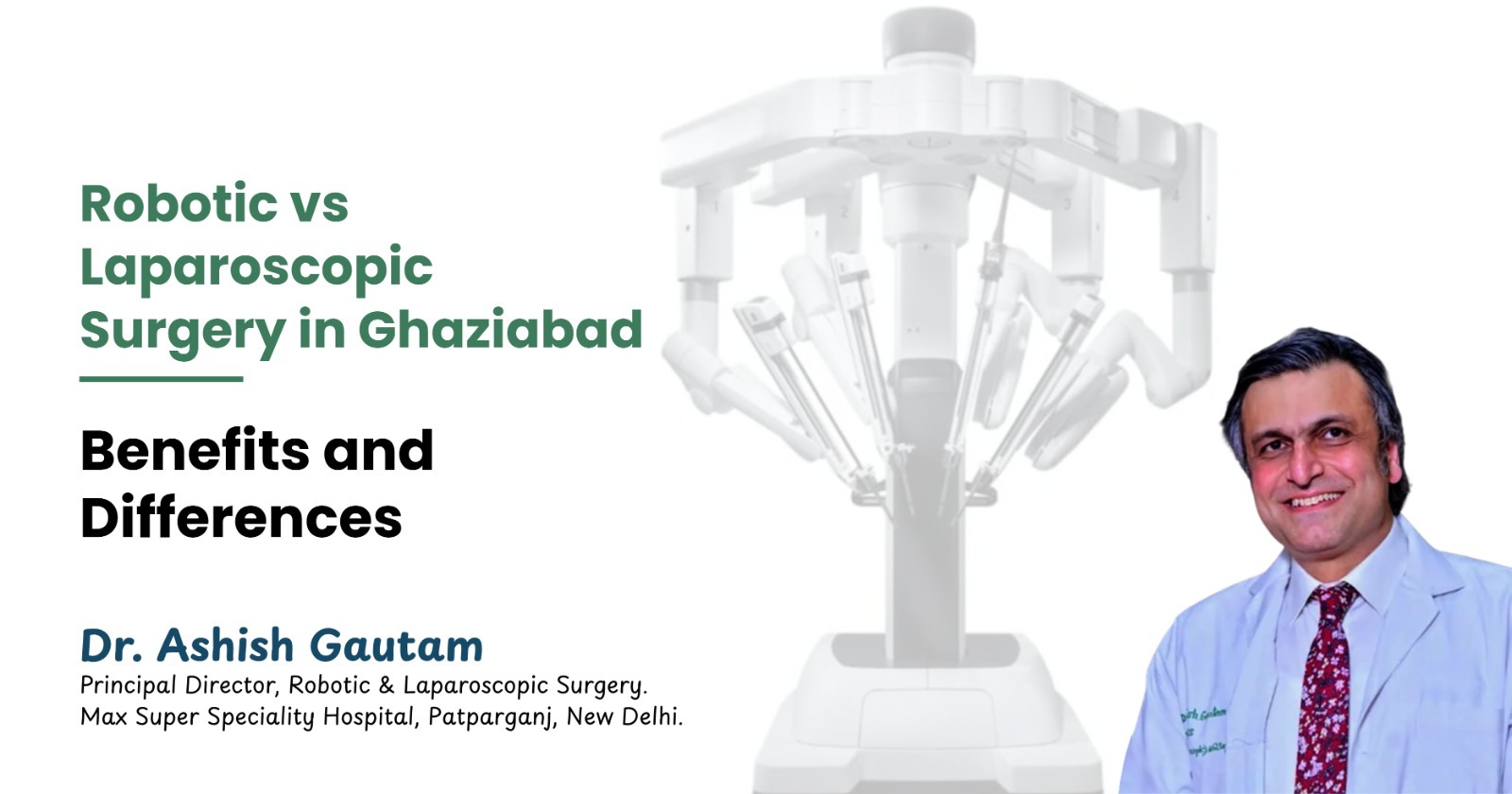
Robotic vs Laparoscopic Surgery in Ghaziabad: Benefits and Differences
Being told you need surgery quickly raises a second question: how will it be done? For most abdominal conditions today, the answer is no longer a long open incision. Patients exploring robotic surgery and laparoscopic surgery in Ghaziabad are usually choosing between two minimally invasive approaches. Both aim for smaller cuts, less pain and a faster return home, but they differ in how the surgeon actually operates.
This guide explains both techniques, what published research says about each, which conditions they treat, and how to choose the right robotic surgeon in Raj Nagar Ghaziabad or elsewhere in the city. It draws on current evidence and on the practice of Dr. Ashish Gautam, Principal Director, General, Laparoscopic & Robotic Surgery at Max Super Speciality Hospital, Patparganj, who headed the surgical department at Yashoda Hospital Ghaziabad from 2010 to 2023.
What Is Robotic Surgery?
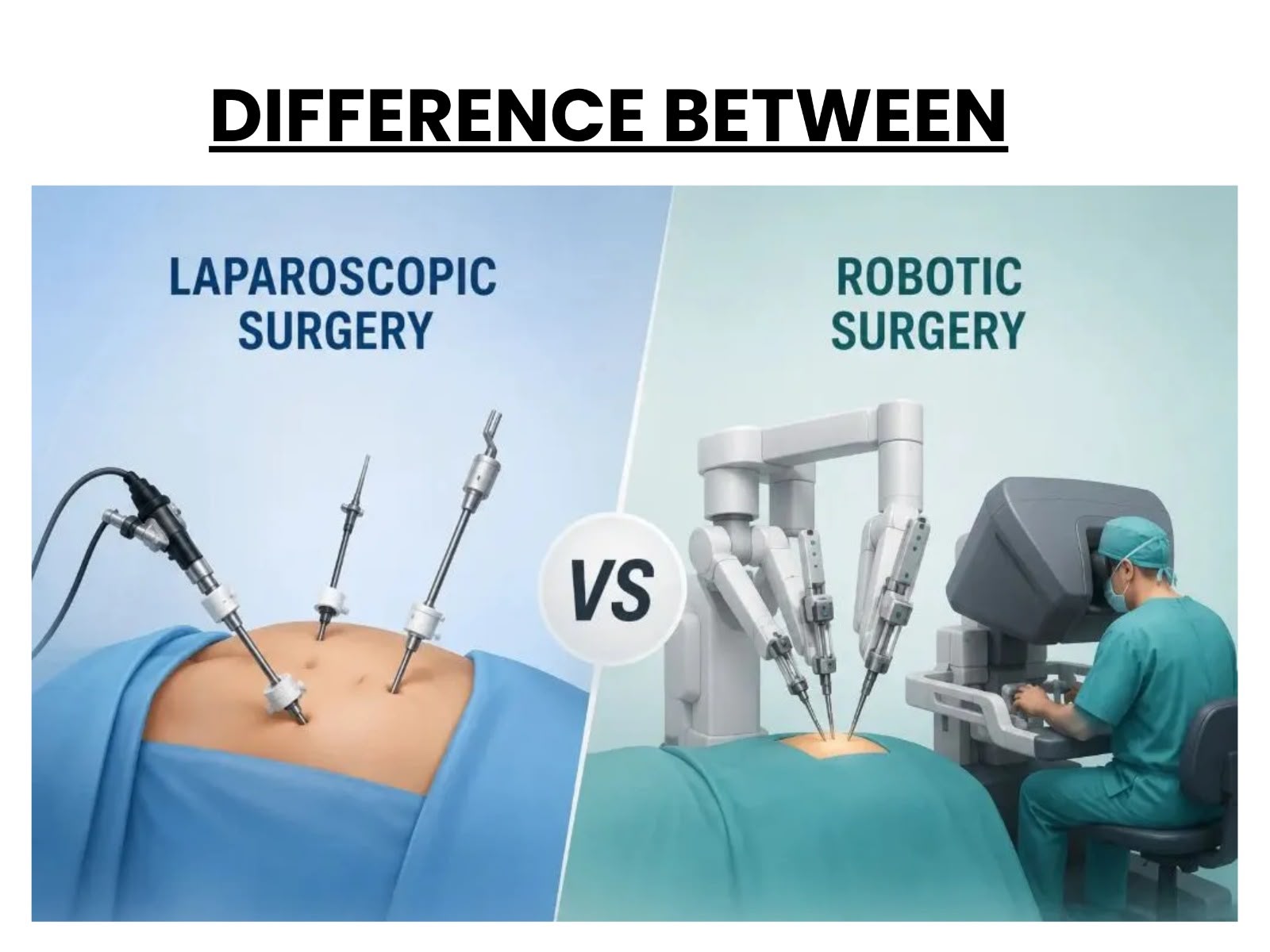
Robotic surgery, also called robot-assisted surgery, is a form of keyhole surgery in which the surgeon controls slender instruments mounted on robotic arms from a console beside the operating table. The robot never acts on its own. Every movement comes from the surgeon’s hands, and the system translates it into a smaller, steadier movement inside the body.
Three features set it apart from conventional keyhole surgery:
- 3D vision: a magnified, high-definition three-dimensional view that the surgeon controls directly.
- Wristed instruments: tips that bend and rotate more freely than a human wrist, which helps in narrow spaces such as the pelvis.
- Tremor filtering and motion scaling: natural hand tremor is removed, and large hand movements can be scaled down to very fine ones near nerves and blood vessels.
From the patient’s side, the incisions look much like those of laparoscopy: a few small cuts, each roughly a centimetre long.
What Is Laparoscopic Surgery?
Laparoscopic surgery, widely known as keyhole surgery, has been the standard minimally invasive approach for more than three decades. Instead of the long cut needed for open abdominal surgery, the surgeon typically makes two to four incisions of about half an inch or less: one for a camera and the rest for instruments.
The abdomen is gently filled with carbon dioxide to create working space. A laparoscope, a thin telescope with a light and high-definition camera, sends a magnified image to a monitor. The surgeon stands at the table and operates with long, straight instruments while watching the screen.
An experienced laparoscopic surgeon in Ghaziabad can perform most routine abdominal operations this way, including gallbladder removal, appendix removal and hernia repair, often with a hospital stay of a day or two.
Difference Between Robotic and Laparoscopic Surgery?
Both are keyhole techniques. The real differences lie in the surgeon’s tools and in the trade-offs between precision, time and cost.
| Factor | Robotic surgery | Laparoscopic surgery |
|---|---|---|
| How the surgeon operates | Seated at a console, controlling robotic arms | Standing at the table, holding instruments |
| View | Magnified 3D, camera controlled by the surgeon | High-definition 2D or 3D on a monitor |
| Instrument movement | Wristed, wide range of motion, tremor filtered | Long, rigid, straight instruments |
| Operating time | Usually longer | Usually shorter |
| Conversion to open surgery | Lower in several complex procedures | Somewhat higher in complex cases |
| Cost | Higher, due to equipment and maintenance | Lower |
| Availability | Advanced centres with trained teams | Widely available |
| Best suited for | Complex operations in tight spaces | Routine and moderately complex operations |
A 2025 review in the Journal of Medicine and Life summed it up: robotic surgery performed better in complex procedures needing high precision, while laparoscopy was preferable for routine cases where shorter operating time and lower cost matter.
Benefits of Robotic Surgery
The advantages of robotic surgery are clearest in operations where space is tight and structures are delicate.
- Precision in difficult anatomy: wristed instruments and 3D vision help in the deep pelvis, around the oesophagus and stomach, and close to nerves and major vessels.
- Fewer conversions to open surgery in complex cases: in colorectal surgery, studies link the robotic approach to fewer conversions and shorter hospital stays. In one pooled analysis of pancreatic tumour surgery, conversion occurred in 4.9% of robotic cases against 15.7% of laparoscopic ones, though the evidence base is small.
- Faster functional recovery in selected operations: randomised trials in prostate surgery show earlier return of urinary control after robotic surgery.
- Less blood loss: a meta-analysis of randomised trials found lower blood loss with the robotic approach.
- Steadier performance in long operations: the seated console reduces arm and shoulder fatigue for the surgeon.
These gains are procedure-specific. For many routine operations, robotic surgery in Ghaziabad or anywhere else offers results similar to laparoscopy, at a higher cost.
Benefits of Laparoscopic Surgery
Laparoscopy remains the workhorse of modern surgery for good reason.
- Decades of proven results: outcomes for common operations such as gallbladder removal and hernia repair are well established.
- Shorter operating time: a meta-analysis of randomised trials found laparoscopy faster than robotic surgery, with a lower total complication rate and lower operative cost in the trials pooled.
- Lower cost: no robotic platform means lower theatre and equipment charges.
- Wide availability: most well-equipped hospitals offer it, so treatment is rarely delayed.
- All the core keyhole benefits: smaller wounds, less pain, lower infection risk and a quicker return to daily life than open surgery.
For straightforward cases, an experienced laparoscopic surgeon in Raj Nagar Ghaziabad can usually deliver excellent results without the added expense of a robot.
Which Medical Conditions Can Be Treated Through Robotic Surgery?
In general and gastrointestinal surgery, the robotic approach is most often considered for:
- Severe obesity and metabolic disease: sleeve gastrectomy, gastric bypass and especially revision of earlier weight-loss surgery.
- Complex hernias: large ventral, incisional and recurrent hernias that need abdominal wall reconstruction.
- Difficult gallbladder and bile duct disease: inflamed gallbladders, previous upper abdominal surgery or common bile duct stones.
- Colorectal conditions: rectal cancer, rectal prolapse and diverticular disease, where pelvic space is narrow.
- Hiatal hernia and chronic reflux: fundoplication and hiatal repair near the diaphragm.
- Stomach and oesophageal surgery: selected tumours and complex resections.
Robotic platforms are also widely used by urologists and gynaecologists for prostate, kidney, bladder, uterine and endometriosis surgery.
Which Medical Conditions Can Be Treated Through Laparoscopic Surgery?
Nearly all planned abdominal and pelvic operations can be performed laparoscopically. Common examples include:
- Gallstones and cholecystitis: laparoscopic cholecystectomy is the global standard for gallbladder removal.
- Appendicitis: both planned and emergency appendix removal.
- Hernias: inguinal, umbilical, incisional and hiatal hernia repair with mesh.
- Weight-loss surgery: sleeve gastrectomy and gastric bypass.
- Intestinal conditions: selected colon resections, adhesions and some causes of bowel obstruction.
- Solid organ surgery: removal of the spleen or adrenal gland in suitable patients.
- Diagnostic laparoscopy: looking inside the abdomen to find the cause of unexplained pain.
Robotic Surgery vs Traditional Open Surgery
Open surgery reaches the organs through a single incision that is often 6 to 12 inches long. It gives the surgeon direct sight and touch, but the size of the wound drives most of the recovery burden.
Compared with open surgery, robotic and laparoscopic approaches generally offer:
- Smaller scars and less pain after the operation.
- Less blood loss and fewer wound infections.
- A lower risk of wound breakdown and incisional hernia.
- Shorter hospital stays and earlier walking, which also lowers the risk of blood clots.
Open surgery still has a place. It may be the safer choice in some emergencies, for very large tumours, for dense scarring from earlier operations, or for patients with serious heart or lung disease who cannot tolerate the gas used in keyhole surgery. A good surgeon will explain why a particular approach is being recommended.
How to Choose the Right Robotic Surgeon in Raj Nagar Ghaziabad?
Research consistently shows that surgeon experience and case selection matter as much as the technology. When comparing a robotic surgeon in Raj Nagar Ghaziabad or across the city, look for:
- Training in both techniques: a surgeon skilled in laparoscopic and robotic surgery can recommend whichever suits your case, rather than whichever they happen to offer.
- Formal robotic credentials: structured robotic training and membership of bodies such as the Clinical Robotic Surgery Association.
- Experience with your specific procedure: ask how often they perform it and how they handle complications.
- Hospital support: an accredited hospital with a robotic platform, intensive care, experienced anaesthetists and specialist backup.
- Clear communication: a frank discussion of benefits, risks, the chance of conversion to open surgery and the expected cost.
- Convenient follow-up: access to consultations close to home in Raj Nagar or nearby.
Useful questions to ask:
- Why do you recommend this approach for me?
- What happens if the operation needs to change during surgery?
- When can I return to work?
Why Consider Dr. Ashish Gautam for Robotic and Laparoscopic Surgery?
Dr. Ashish Gautam is Principal Director, General, Laparoscopic & Robotic Surgery at Max Super Speciality Hospital, Patparganj, with more than three decades of surgical practice. For many Ghaziabad families he is a familiar name: he spent over 15 years at Yashoda Hospitals in Ghaziabad and Kaushambi, heading the Department of Robotic, Gastrointestinal, Bariatric, Minimal Access & General Surgery from 2010 to 2023.
- Training: MBBS and MS (General Surgery) from S.N. Medical College, Agra, followed by three years of senior residency at Maulana Azad Medical College and Lok Nayak Hospital, New Delhi.
- Robotic training: completed at the University of Sharjah in 2022, accredited by the Royal College of Surgeons of England.
- Fellowships: FACS (American College of Surgeons), FALS (Advanced Laparoscopic Surgery) and FIAGES.
- Memberships: Clinical Robotic Surgery Association, IFSO, Asia-Pacific Hernia Society, AMASI and the Obesity and Metabolic Surgery Society of India.
- Areas of focus: bariatric and metabolic surgery, hernia, gallbladder, colorectal and laser varicose vein surgery.
He has also delivered the Dr. Prem Lata Oration on recent advances in minimal access surgery at IMA Ghaziabad. Because he performs both techniques, patients looking for a robotic surgeon in Ghaziabad get a recommendation based on their condition, not on the equipment.
What to Expect Before and After Robotic or Laparoscopic Surgery?
Before surgery
- A detailed consultation to confirm the diagnosis and choose the approach.
- Tests such as blood work, ultrasound or CT, ECG and an anaesthesia fitness check.
- A review of your medicines, especially blood thinners and diabetes medication.
- Fasting for several hours before the operation, as your team advises.
- Stopping smoking and arranging someone to take you home.
After surgery
- Most patients sit up and walk within hours, which helps prevent clots and chest infection.
- Fluids come first, then a gradual return to normal food.
- Mild shoulder-tip pain from the carbon dioxide gas is common and settles within a few days.
- Many people return to desk work within one to two weeks, while heavy lifting is usually avoided for longer. Your surgeon will set the timeline for your procedure.
Contact your surgeon promptly if you notice fever, worsening pain, redness or discharge from a wound, persistent vomiting, breathlessness or calf swelling.
Risks and Possible Complications of Robotic and Laparoscopic Surgery
Both approaches are considered at least as safe as open surgery, and serious complications are uncommon. Still, every operation carries some risk, and the level depends on the procedure’s complexity and the surgeon’s experience.
Risks shared by both techniques include:
- Reactions to general anaesthesia.
- Bleeding or infection at the wound or inside the abdomen.
- Injury to nearby structures such as the bowel, bladder, blood vessels or bile duct.
- Blood clots in the legs or lungs.
- A hernia developing at a port site later on.
- Effects of the carbon dioxide gas, such as temporary shoulder pain or, rarely, gas trapped under the skin.
Robotic procedures can take longer under anaesthesia, and equipment faults, though rare, are possible. In either technique, the surgeon may switch to open surgery if safety requires it. Surgical texts stress that this is a sound clinical decision, not a failed operation.
When Should You Consult a Robotic or Laparoscopic Surgeon?
Book a consultation if you have:
- Recurring pain in the upper right abdomen, especially after fatty meals, or gallstones found on a scan.
- A bulge in the groin, near the navel or at an old scar that grows, aches or becomes hard to push back.
- Long-standing heartburn or reflux that does not respond to medicines.
- Severe obesity along with diabetes, high blood pressure or sleep apnoea.
- Rectal bleeding, a lasting change in bowel habit or a growth found on colonoscopy.
- Painful varicose veins or skin changes on the legs.
Seek emergency care immediately for sudden severe abdominal pain, persistent vomiting, high fever, yellowing of the eyes or a hernia that becomes painful and cannot be pushed back.
Robotic and Laparoscopic Surgery Consultation in Raj Nagar Ghaziabad
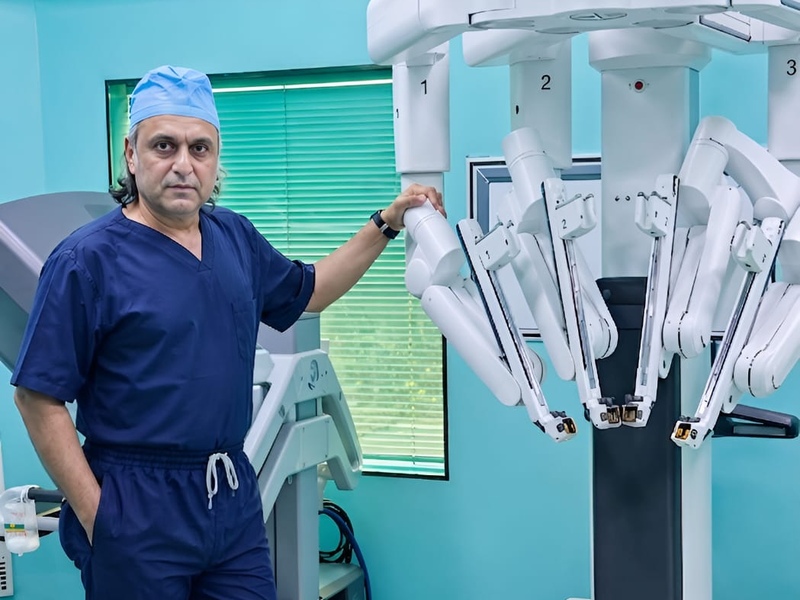
For patients in Raj Nagar, Raj Nagar Extension, Kavi Nagar and nearby neighbourhoods, seeing a robotic surgeon in Raj Nagar Ghaziabad close to home makes the first visit and post-operative follow-up far easier. Dr. Ashish Gautam consults at Dr. Gautam Healthcare Clinic (R 15/2, Near Hint Chowk Road, RDC Raj Nagar, Ghaziabad, Uttar Pradesh 201002 on Monday to Friday, with surgery performed at his Ghaziabad hospital at Raj Nagar, Ghaziabad.
Bring any previous scans, blood reports, discharge summaries and a list of current medicines to your appointment. Video consultations are also available for initial advice or follow-up.
Whether you need a laparoscopic surgeon in Raj Nagar Ghaziabad for a routine gallbladder or hernia operation, or advice on whether robotic surgery suits a more complex condition, an early consultation gives you the widest choice of options.
Conclusion
Robotic and laparoscopic surgery are not rivals so much as two tools from the same family. Laparoscopy remains fast, proven and cost-effective for most routine operations. Robotic surgery adds precision and control where anatomy is tight and the operation is complex. Both offer a far easier recovery than open surgery.
The better choice depends on your condition, your overall health and the judgement of the surgeon treating you. Consulting an experienced laparoscopic surgeon in Raj Nagar Ghaziabad who is also trained in robotic surgery means the decision is made around you, not around the technology.
FAQs
Not universally. Robotic surgery offers advantages in complex operations that
demand fine precision, such as rectal, oesophageal or revision weight-loss
surgery. For routine procedures like most gallbladder and hernia operations,
laparoscopy delivers comparable results with shorter operating time and lower
cost. The right choice depends on your condition and your surgeon’s assessment.
Yes, when performed by a trained surgeon in a well-equipped hospital. The
surgeon controls every movement, and the robot cannot act independently. Studies
show complication rates similar to or, in some complex procedures, lower than
laparoscopy. Choosing an experienced robotic surgeon in Ghaziabad with formal
training is the most important safety step.
Robotic surgery in Ghaziabad is used for obesity and metabolic surgery, complex
and recurrent hernias, difficult gallbladder and bile duct disease, rectal and
colon conditions, hiatal hernia and reflux, and selected stomach and oesophageal
operations. It is also common in prostate, kidney and gynaecological surgery.
Laparoscopic surgery in Ghaziabad is commonly used for gallstones, appendicitis,
inguinal and umbilical hernias, hiatal hernia, weight-loss surgery, selected
bowel operations and diagnostic laparoscopy. A laparoscopic surgeon in Ghaziabad
will confirm whether your condition suits a keyhole approach.
Yes. Smaller incisions mean less trauma to the abdominal wall, less wound pain
and a lower need for painkillers. Most patients walk the same day or the next
and return home sooner than after open surgery.
Authored by: Dr. Ashish Gautam – Principal Director – General, Laparoscopic & Robotic Surgery, Max Healthcare.
- Experience: Over 30 years of experience in general, minimally invasive, gastrointestinal, bariatric and robotic surgery.
- Education: MBBS and MS in General Surgery from S.N. Medical College, Agra.
- Key Fellowships:
- FACS – Fellow of the American College of Surgeons.
- FALS – Fellow in Advanced Laparoscopic Surgery.
- FIAGES – Fellow of the Indian Association of Gastrointestinal Endoscopic Surgeons.
- Specialised Training: Robotic Surgery Training from the University of Sharjah (2022), accredited by the Royal College of Surgeons of England.
- Previous Experience: Served in senior surgical and leadership positions at Yashoda Hospital, Ghaziabad (2010–2023), and NDMC Tertiary Care Referral Hospital, New Delhi.
- Areas of Expertise: Robotic surgery, advanced laparoscopy, gastrointestinal surgery, bariatric and metabolic surgery, colorectal surgery and hernia surgery.
- Professional Memberships: Associated with ASI, IAGES, AMASI, IFSO, CRSA, OSSI and other national and international surgical organisations.
- Academic Contributions: Published clinical research and case reports, delivered professional orations and participated in national medical conferences.
Disclaimer: This article is for general information only and is not a substitute for professional medical advice, diagnosis or treatment. Please consult a qualified surgeon to decide on the approach that is right for your condition.

Dr. Ashish Gautam
MS, FACS (USA), FIAGES, FALS (GI Surgery),
FALS (Bariatric Surgery), FALS
(Colorectal Surgery)
Director - Gen, Laparoscopic & Robotic Surgery,
Max Super Speciality Hospital, Patparganj